
Who This Is Not For
If you are struggling to pay rent, this will not help you.
If you are dealing with serious illness, recent trauma, or you’re in a mental health crisis, close this page. What I’m describing is not your problem, and pretending it is would be an insult to what you’re actually facing.
This is for women whose lives look fine from the outside.
Good job. Stable relationship. Maybe kids you love. Friends who care. A home. Security.
On paper, you did it right.
And yet.
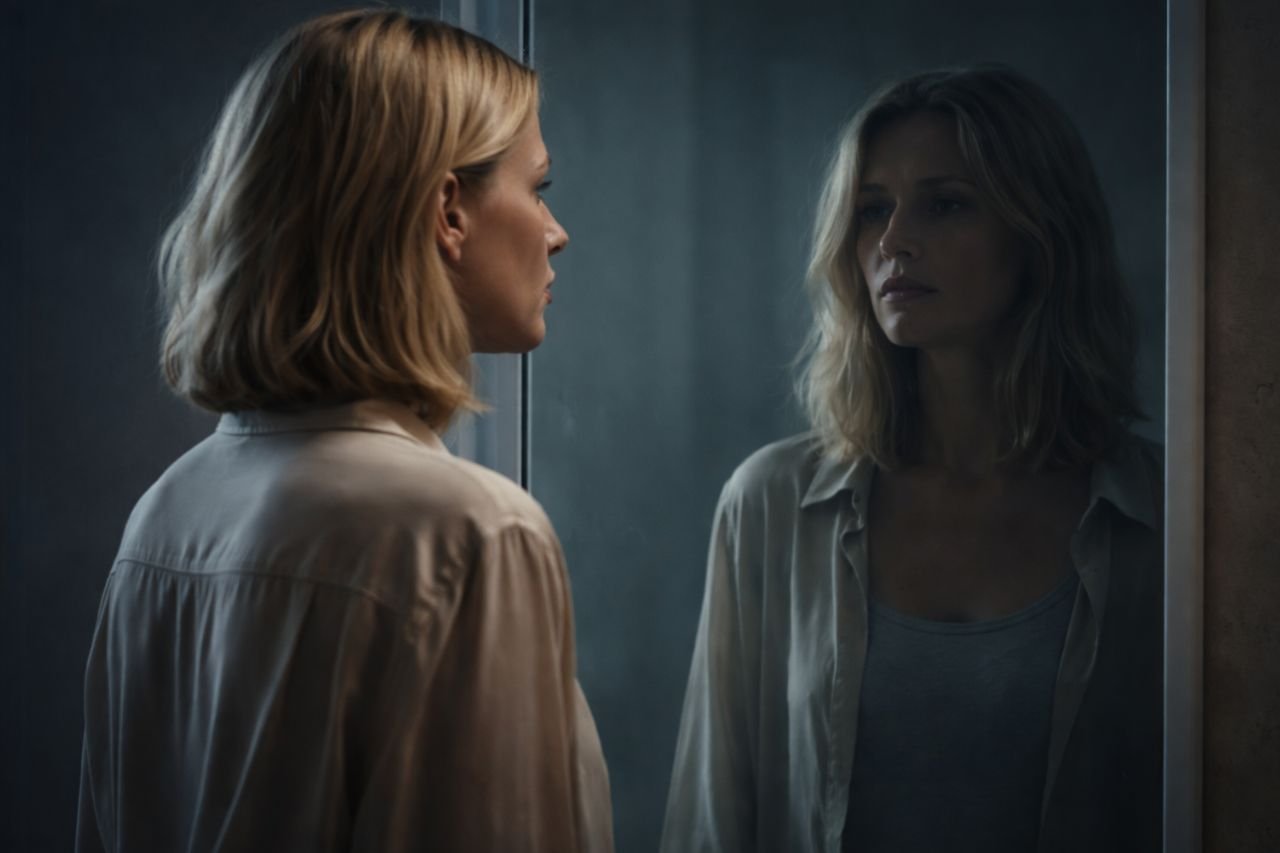
There’s something underneath. Not sadness. Not anger. Something more like numbness. Flatness. A sense that you’re going through motions in a body that feels like it belongs to someone else.
You don’t feel bad.
You just don’t feel alive.
This is what misalignment feels like before you have a word for it.
And when you do feel something, a flash of wanting, a pull toward something you can’t name, you’ve learned to shut it down quickly. Because good women don’t feel that way. Responsible women don’t want things that don’t fit.
So you don’t talk about it.
You adjust. You manage. You tell yourself it’s normal. That this is just what adult life feels like. That wanting more than what you have is childish, or selfish, or a sign that something is broken in you.
But it doesn’t go away.
If your life is good and you are not — if you’re numb in a body that’s supposed to be yours — keep reading.
The Quiet Pattern Most People Miss
Here’s what most people don’t understand about this kind of unhappiness:
You are not unhappy because you failed.
You are unhappy because you succeeded at the wrong life.
You followed the path. You made the responsible choices. You built something stable, something safe, something that works.
And it does work.
Except for one thing.
You.
Somewhere along the way, you stopped feeling like yourself. You stopped feeling period.
The life got quieter. Smaller. More controlled.
And you told yourself that was maturity. That was growth. That was what it meant to be a woman who has her life together.
But lately, you’ve started to notice something: the parts of you that feel most alive are the parts you’re not allowed to have.
Before you keep reading, I need you to answer one question honestly:
Are you trying to fix a feeling, or understand a pattern?
If you want techniques — breathing exercises, gratitude practices, ways to “reframe your mindset” and feel better about your life — this will frustrate you. I’m not offering those.
This is not about making peace with how things are.
This is about understanding why you feel the way you do in the first place.
If that’s not what you’re looking for, that’s okay. But don’t keep reading expecting something I’m not giving you.
The Misalignment Hypothesis
Some unhappiness is not emotional.
It is structural.
And some misalignment is not just structural.
It is somatic.
It lives in your body. In the gap between how you move through the world and how you want to move through the world.
Ask yourself:
Do you ever feel like your body is waiting for permission to want something?
Like there’s a part of you, hungry, restless, awake, that you’ve learned to keep on a leash?
Is there a version of yourself that feels more alive, and more dangerous?
Not reckless. Not irresponsible. Just… less controlled. Less appropriate. Less domesticated.
When was the last time you felt fully present in your own skin?
Not performing. Not managing. Not being the version of yourself that other people need you to be.
Just you. In your body. Alive.
Did you choose this life, or did you choose safety?
And did you realize, only later, that safety and aliveness are not the same thing?
I’m not going to tell you what these questions mean for you.
I’m just asking whether they land.
If they don’t — if you feel nothing reading them — then this probably isn’t your issue. And that’s fine.
But if something stirred when you read them, even just a little, then keep going.
What This Is Not
Before we go further, let me tell you what this is not, so you don’t waste your time looking for something that isn’t here.
This is not burnout.
Burnout is what happens when you do too much of something that matters to you. You’re exhausted because you care, and you gave too much.
This is different. This is what happens when you succeed at something that was never really yours to begin with.
Burnout responds to rest. This does not.
This is not about gratitude.
I’m not going to tell you to count your blessings or remind yourself how good you have it. You already know. That’s part of what makes this so confusing — you know your life is good, and it doesn’t change the feeling.
Gratitude is powerful, but it doesn’t fix misalignment. It just makes you feel guilty for noticing it.
This is not a mindset problem.
You don’t need to “reframe” how you see your life. You don’t need more positive thinking. You’re not unhappy because you’re looking at things the wrong way.
You’re unhappy because the life you’re living no longer fits the person you’re becoming.
That’s not a perspective issue. That’s a structural one.
This is not about comparison.
I’m not going to tell you to get off social media or stop looking at other people’s lives. This isn’t about envy. It’s not about wanting what someone else has.
It’s about realizing you don’t even want what you have.
This is not about “spicing things up.”
I’m not going to tell you to try new things in the bedroom, or surprise your partner, or communicate your needs better.
Those are fine. But they don’t address the core issue.
This is not about doing different things.
This is about realizing you might be a different person than the one you’ve been allowed to be.
And that difference lives in your body, not your calendar.
If what you’re looking for is a better morning routine, a mindset shift, or a way to feel more motivated, you’re in the wrong place.
Those things help with discomfort.
They do not fix misalignment.
The Scripted Life
Most women live a version of the same script.
Do well in school. Get the degree. Build the career. Find the relationship. Make it stable. Make it respectable. Make it work.
And it does work.
Socially, it works beautifully. Your parents are proud. Your friends think you have it together. People look at your life and see success.
But internally?
Internally, it can feel like you’re living in a museum of someone else’s achievements.
Here’s the thing no one tells you:
You can make all the “right” choices and still end up in the wrong life.
Not because you chose badly, but because you never really chose at all.
You followed the path that was laid out. You optimized for safety, or approval, or what made sense at the time. And it worked, in the way that scripts tend to work: predictably, efficiently, successfully.
But somewhere along the way, you became someone different from the person who started walking that path.
And now you’re standing in a life that fit you once, or that you thought was supposed to fit you, and it doesn’t anymore.
That’s not failure.
That’s script fracture.
The life stayed the same. You didn’t.
Desire Without Shame
Let’s talk about the thing you’re not supposed to say out loud.
You want something else.
Not a new hobby. Not a vacation. Not “more romance” or “better communication.”
You want something your life has no room for.
Maybe you don’t know exactly what it is. Maybe it’s vague and formless and lives more in your body than your mind. Maybe it feels dangerous just to acknowledge.
Because if your life is good, if you have a partner who loves you, kids who need you, a routine that works, then wanting something that doesn’t fit into that structure feels like betrayal.
So you’ve learned to kill it before it gets too loud.
You’ve learned to redirect. To rationalize. To remind yourself of all the reasons why wanting what you want is irresponsible, selfish, destabilizing.
You’ve learned that good women, mature women, don’t have desires that inconvenience the people around them.
But here’s the truth no one tells you:
Suppressing desire does not make you a better person.
It makes you a hollow one.
And the more you suppress it, the more everything else starts to feel flat. Numb. Like you’re living in grayscale.
Because desire is not just about sex, or romance, or any single thing you want.
Desire is aliveness.
And when you kill it in one place, it dies everywhere.
That doesn’t mean you have to act on it. That doesn’t mean the thing you want is inherently good, or wise, or without cost.
But it also doesn’t mean the wanting itself is wrong.
The question is not whether your desire is justified.
The question is whether you can hold it without needing to immediately kill it.
Can you feel what you feel, even if it doesn’t fit?
Can you want what you want, even if you don’t know what to do with it yet?
If you think your desire is proof that something is broken in you, if you need to pathologize it before you can even admit it exists, you are already negotiating against yourself.
This is not about permission.
It is about whether you can tolerate being alive in a body that wants things you were taught not to want.
If you can’t, that’s the issue.
Not the desire.
Your fear of it.
The Real Diagnosis
Let me give you a word for what you’re feeling.
Misalignment.
Not depression. Not dissatisfaction. Not a “low libido” or a “communication problem” or “just a phase.”
Misalignment is what happens when the life you are living no longer matches the person you are becoming.
And for some women, that misalignment lives in their body first.
It shows up as:
- Numbness where there used to be hunger
- Restlessness that has no acceptable outlet
- A feeling like you’re playing a role instead of inhabiting your own life
- Wanting something you can’t name and aren’t allowed to have
This is not a problem you can fix with:
- Better communication
- Date nights
- Therapy
- Self-care
- “Reconnecting with your partner”
Those things help with relationship maintenance.
They do not fix erotic misalignment. Not just sex, but the way your body relates to your life.
Because this is not about your relationship.
This is about you.
The person you became while building the life you thought you were supposed to want.
The parts of you that got quiet. The parts that got controlled. The parts that learned to perform aliveness instead of feel it.
And now those parts are waking up.
And they don’t fit anymore.
Where This Shows Up
Misalignment doesn’t look the same for everyone.
For some women, it shows up most intensely in marriage. Not bad, just no longer theirs.
→ [Why Am I So Unhappy in My Marriage]
For others, it’s about success. Achieving everything they were supposed to want, and feeling emptier than before.
→ [Why Am I Unhappy When I Have Everything]
Some feel it as boredom. Not from lack of stimulation, but from being too controlled, too appropriate, too domesticated.
→ [Why Does My Life Feel So Boring When It’s Objectively Good]
Others experience it as restlessness. An unnamed pull toward a life less careful, less managed, less safe.
→ [Why Am I So Restless When My Life Is Stable]
And some women just feel it in their bodies. Not their appearance or achievements, but the person they became. The parts that got smaller.
→ [Why Am I So Unhappy With Myself]
These are not separate problems.
They are different expressions of the same root structure: a life that no longer fits the person living it.
What Happens Next
Most people will close this page and go back to their life.
That’s what usually happens.
They’ll recognize something in what I’ve written, feel it in their body for a moment, and then let it fade back into the background.
Because recognizing misalignment is one thing.
Admitting what you actually want is another.
And most women aren’t ready for that.
Not because they’re weak, or afraid, or broken.
But because the thing you want might not fit into the life you built.
And that is terrifying.
You can live with it. Plenty of women do. You can manage it, suppress it, medicate it, reframe it as a personal failing that needs to be fixed.
That’s a choice.
But a few women will realize something different.
They’ll realize this is not about their relationship. It is not about communication, or spontaneity, or “rekindling the spark.”
This is about whether they are willing to be alive in their own body, even if that aliveness doesn’t fit the script they’ve been following.
If you can’t ignore it anymore, there is a path.
Not easy. Not safe. Real.